The Crack Is the Point
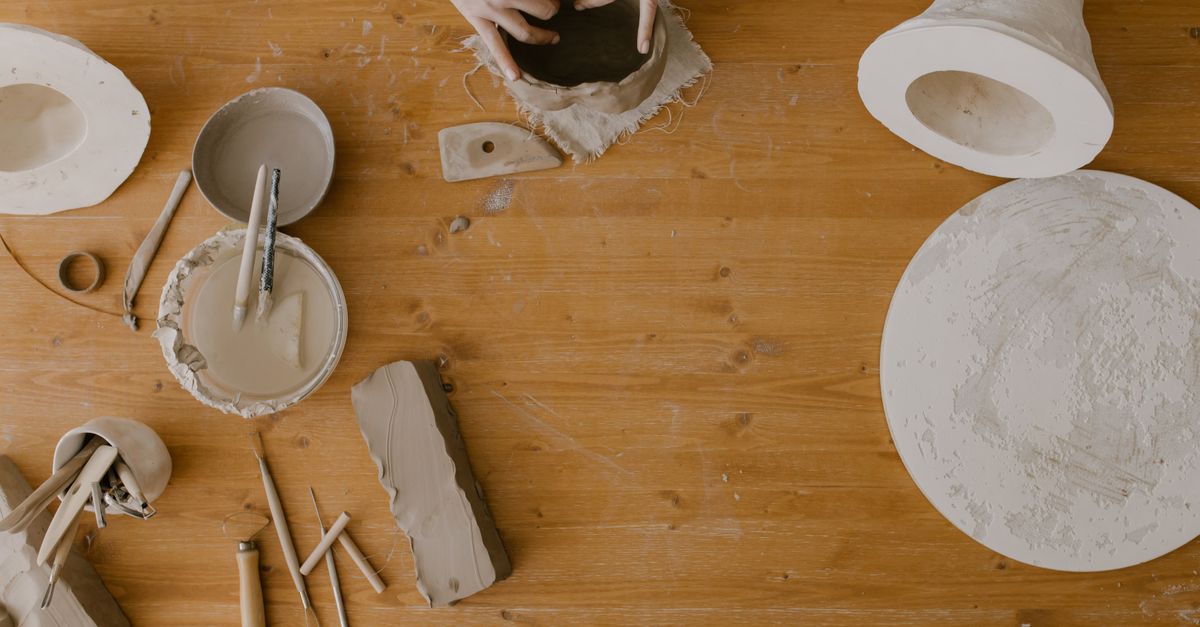
There is a bowl sitting on a worktable at Blue House Too Gallery, 970 Watters Creek Blvd, and it is broken. That is not a problem. That is, in fact, the whole idea.
The gallery — home base for the Allen Arts Alliance and one of the quieter creative anchors along the Watters Creek corridor — is hosting a hands-on kintsugi workshop that asks participants to do something genuinely counterintuitive: take a piece of damaged pottery, trace every crack with gold, and call the result finished. More than finished, actually. Better.
For a community that tends to prize the new and the polished — fresh developments, gleaming storefronts, just-poured concrete — it is a quietly radical premise.
What Kintsugi Actually Is
The word translates roughly as “golden joinery,” and the practice is centuries old. Japanese artisans developed it as a philosophy as much as a technique: rather than disguising damage, you illuminate it. The fractures become a map of the object’s history. The repair is not a cover-up; it is an acknowledgment that something broke, survived, and was worth saving.
In a workshop setting, participants learn the step-by-step mechanics behind that philosophy — how to work with the materials, how to coax gold into cracks with precision, how to transform what looks like a flaw into a deliberate design feature. All supplies are included, so there is no barrier of equipment or experience. You show up, you break something (or bring something already broken), and you leave with an object that is more interesting than it was before.
The Allen Arts Alliance has built its programming around exactly this kind of accessible entry point. The organization has long worked to lower the threshold between Allen residents and hands-on creative practice, and kintsugi fits that mission almost too neatly. It requires no prior training. It rewards patience over precision. And it produces something genuinely singular — no two repaired pieces will ever look the same, because no two breaks are ever the same.
Why This Moment, Why This Workshop
There is something worth noticing about the timing of an event like this in Allen in the summer of 2026. The city has spent the better part of a decade in a sustained expansion — new corridors, new venues, new programming at every scale. The Credit Union of Texas Event Center is preparing to host the League of Legends World Championship. A brand-new park just broke ground at Sloan Corners. The library is running a full summer slate for kids. Allen is, by almost every measure, in a season of addition.
A kintsugi workshop does not add anything new. It works with what is already there — chipped, cracked, imperfect — and finds a way to make it matter. That contrast is not a criticism of the city’s momentum; it is a complement to it. Any community that can hold both the grand opening and the quiet studio session, both the esports arena and the worktable with the broken bowl, is doing something right.
Blue House Too Gallery has been doing its part to hold that quieter space. Tucked along Watters Creek Blvd in a stretch of Allen that also hosts open-air concerts and patio dining, the gallery functions as a place where the scale stays human. A workshop means a room, a teacher, a handful of participants, and enough time to actually learn something.
The Hands That Do the Work
There is a specific quality to knowledge that lives in the hands rather than the head. You can read about kintsugi — its origins, its philosophy, its cultural weight in Japanese aesthetics — and come away with a reasonable intellectual understanding of what it means. You will still have no idea how to do it. The technique requires touch: the right amount of pressure, the steadiness to follow a crack’s irregular path, the restraint to stop before you overwork it.
That is precisely what a workshop format delivers, and it is what distinguishes the Allen Arts Alliance’s programming from a lecture or a demonstration. Participants are not watching someone else make art. They are making it themselves, in real time, with materials in their hands and a specific problem to solve — how do you make this broken thing whole, and beautiful, and honest about its own history all at once?
The answer is never the same twice. A hairline fracture across a glaze calls for a different touch than a clean break through the body of the vessel. Part of the workshop’s value is learning to read the damage before you repair it.
A Creative Corner Worth Knowing
For Allen residents who have not yet spent time in the Blue House Too Gallery space, the kintsugi workshop is a reasonable excuse to find out what they have been missing. The Allen Arts Alliance has been cultivating this address as a site for exactly this kind of programming — workshops, community art experiences, and events that treat creative practice as something available to everyone, not just people who already consider themselves artists.
The Watters Creek Blvd location puts the gallery within easy reach of the broader Watters Creek district, which means a workshop visit can anchor an evening that includes dinner, a walk along the creek, or a stop at one of the surrounding shops. The Concerts by the Creek summer series runs on Saturdays through the season, offering free live music on the Village Green for anyone who wants to extend the evening. The corridor rewards the kind of unhurried wandering that a summer evening in North Texas occasionally allows.
But the workshop itself does not need supplementing. It is complete on its own terms — a few hours, a broken piece of pottery, a careful application of gold, and a finished object that is more honest than it was before it cracked.
The Larger Argument
Kintsugi has traveled a long way from its origins in Japanese craft tradition to a gallery workroom in Allen, Texas, and something is inevitably lost or altered in that journey. But the core argument survives the distance: the history of a thing — including its damage — is worth preserving rather than erasing.
That is a harder case to make in a culture that defaults toward replacement, toward the new model and the fresh start. Allen is, in many ways, a city built on the premise that things can always be bigger, newer, and better. The kintsugi workshop does not argue against that premise so much as it offers a counterweight — a room where broken things are welcome, where the crack is not a problem to be solved but a story to be told in gold.
All supplies are included. No experience is necessary. You just have to be willing to show up with something that is not quite whole.